Ethanol Is Destroying Your Small Engine
Most pump gas contains up to 10% ethanol. Small engines were never designed for it — and we see the damage every single day.
What Ethanol Does to Small Engines
Ethanol is an alcohol-based fuel additive blended into most gasoline sold at the pump today. Your car handles it reasonably well. Your lawn mower, chainsaw, generator, and pressure washer do not.
Small engines use rubber fuel lines, plastic carburetors, and fuel system components that were designed before ethanol blends became standard. Ethanol is hygroscopic — it absorbs moisture from the air — and it is highly corrosive to the rubber and plastic parts inside your fuel system.
The result? Fuel lines that literally liquefy from the inside out, carburetors gummed up with black sludge, fuel filters completely blocked, and engines that won't start or run rough no matter how many times you pull the cord.
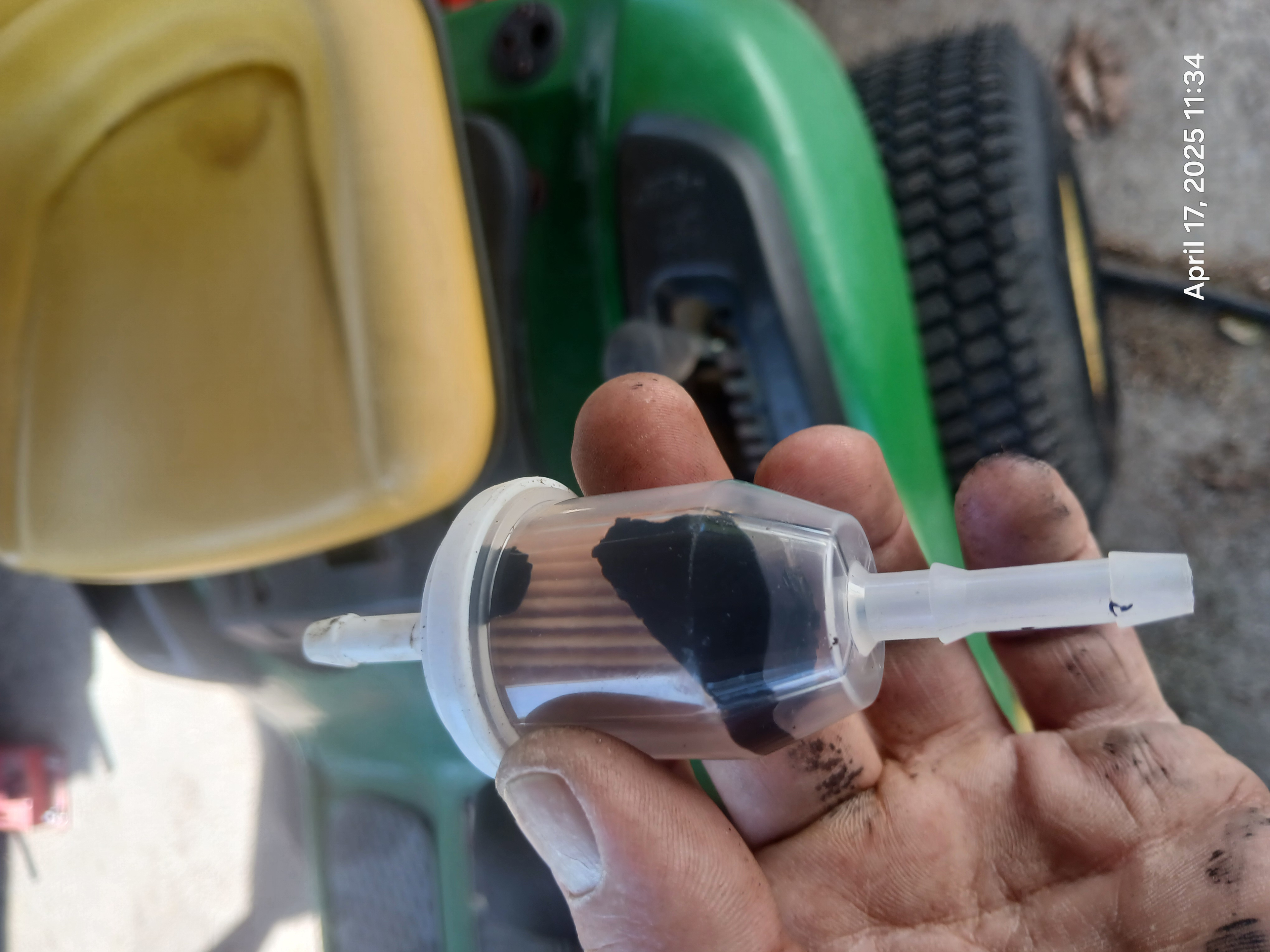
This Is What a Clogged Fuel Filter Looks Like
This fuel filter came off a John Deere riding mower. The owner brought it in because it wouldn't start. The filter is completely plugged with black sludge — that's not dirt. That's the inside of the fuel line. The ethanol in the gas broke down the rubber fuel line over time and turned it into a thick, tar-like material that flowed right into the filter and sealed it shut.
No fuel can pass through that filter. The engine is starved. And the filter is just the beginning — that same material is coating the inside of the carburetor, the fuel bowl, and every passage in the fuel system.
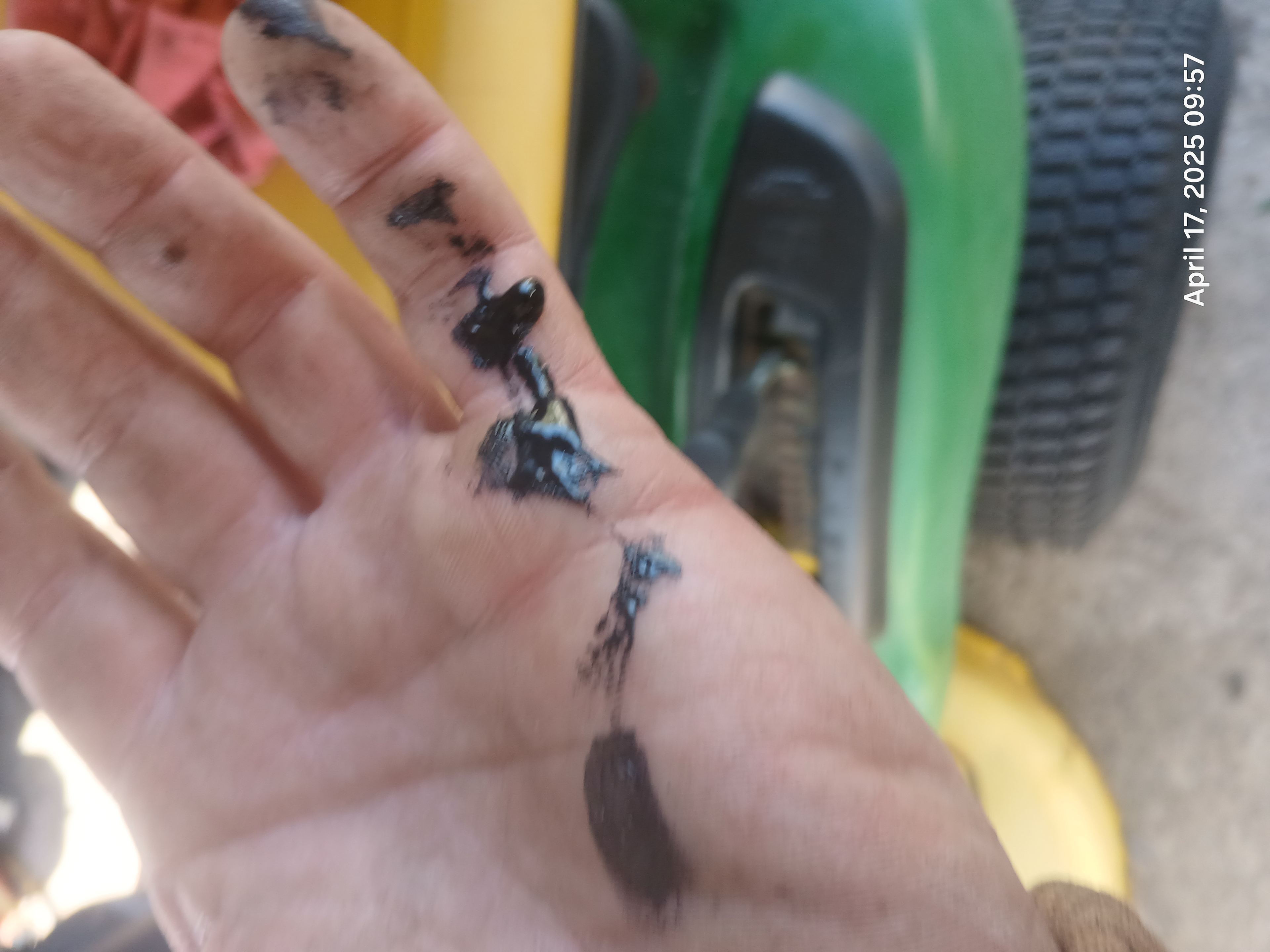
This Is What Liquefied Fuel Line Looks Like on Your Hands
When we pulled the fuel line off this mower, it didn't come off in one piece. It came off in chunks — soft, gooey, black material that used to be a rubber fuel line. This is what ethanol does over time. The alcohol in the fuel slowly dissolves the rubber from the inside out until the line loses its structure entirely.
That black substance on my hand is what was flowing through the fuel system of this mower. It was coating the carburetor jets, blocking the fuel filter, and sitting in the fuel bowl. The owner had no idea — the mower just stopped starting one day.
What You Can Do About It
Use Ethanol-Free Gas
The single best thing you can do for your small engine is run it on ethanol-free fuel. Look for 91+ octane non-ethanol gas at marinas, some gas stations, or buy pre-mixed fuel like TruFuel or VP Small Engine Fuel.
Add a Fuel Stabilizer
If you must use pump gas, add Ethanol Shield fuel stabilizer every time you fill up. It's specifically formulated to combat ethanol damage in small engines — it won't reverse existing damage but it slows the degradation process significantly.
Don't Let Fuel Sit
Ethanol-blended gas goes stale in as little as 30 days. Never store equipment with old gas in the tank. Either run it dry or use stabilizer before storing for the season.
Replace Fuel Lines Proactively
If your equipment is more than 3–4 years old and has been running on pump gas, have the fuel lines inspected. Replacing them before they liquefy is a fraction of the cost of a full carburetor rebuild.
We Fix Ethanol Damage Every Day
Ethanol damage is the number one cause of small engine fuel system failures we see at Rude Boy Small Engine Repair. Clogged carburetors, dissolved fuel lines, gummed-up fuel bowls — we've seen it all and we know exactly how to fix it.
If your equipment won't start, runs rough, or surges and dies, there's a good chance ethanol is the culprit. Bring it in or schedule a pickup and we'll diagnose it, clean it out, and get it running right.
Ready to Get Your Equipment Running?
Drop it off at our shop in Simpson, NC, or let us come to you. Walk-ins welcome — call ahead for faster service.